SEMINARS AND VIDEO PRESENTATIONS
The seminars and video presentations of Dr Lewis Keizer offer a wide-ranging exploration of biblical scholarship, early Christianity, Western esotericism, initiation, mysticism and the historical development of spiritual traditions. Drawing upon decades of research, Keizer approaches these subjects from both an academic and initiatory perspective, frequently challenging conventional interpretations and encouraging the student to examine the deeper historical and symbolic foundations of religious belief. Among the subjects explored are his important studies of Mary Magdalene and her role within early Christianity, the principles and historical development of Initiation in ancient and modern traditions, and the remarkable symbolism, architecture and esoteric associations of Rosslyn Chapel. Together, these seminars provide a valuable introduction to Keizer’s broader body of work and his distinctive approach to recovering and interpreting the often-overlooked currents of the Western spiritual tradition.

Diaconate Modules
The Diaconate Modules developed within the teachings of Dr Lewis Keizer provide a structured introduction to the spiritual responsibilities, disciplines and practical service associated with the office of the Deacon. Rather than treating the Diaconate merely as an ecclesiastical rank, the material presents it as a stage of formation, purification and dedicated service, in which the student begins to translate spiritual knowledge into practical responsibility toward others.
The modules explore the foundations of sacred ministry, ethical conduct, prayer, meditation, liturgical participation, spiritual discipline and the development of the interior qualities required of one who serves within a living spiritual tradition. Particular emphasis is placed upon humility, reliability, compassion, self-examination and service, together with an understanding that true ministry must arise from inner transformation rather than from title or status.
In this way, the Diaconate becomes a preparatory path in which the student learns to serve the sacred work, support the spiritual community and develop the maturity necessary for greater responsibility. The modules therefore provide both a practical and initiatory foundation for those who may later feel called to proceed toward the Priesthood.

Priesthood Modules
The Priesthood Modules of Dr Lewis Keizer develop the deeper theological, mystical and sacramental dimensions of spiritual ministry. Building upon the foundations established through earlier study and service, they present Priesthood not simply as an office or qualification, but as a vocation of inner transformation, spiritual responsibility and conscious service to humanity.
The material explores the role of the priest as mediator, teacher, healer, celebrant and servant of the Divine Mysteries. It brings together prayer, meditation, sacred symbolism, liturgy, sacramental practice and the cultivation of the inner life, while emphasising the necessity of ethical integrity, disciplined spiritual practice and continuing self-examination. The priest is called not merely to perform rites, but to become increasingly capable of expressing Wisdom, Compassion, Love and Divine Presence through both ritual and everyday life.

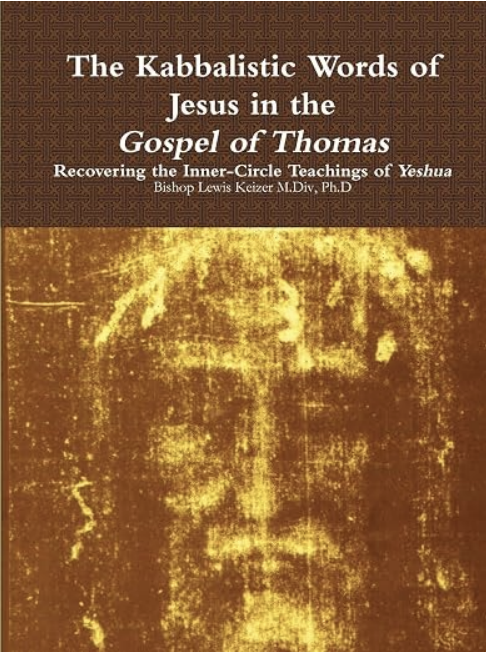
The Kabbalistic Words of Jesus in the Gospel of Thomas.
This series of lectures was given to students during 2009. Some of the material in these lectures has appeared in earlier uploads but is clarified in this series. Dr Keizer reconstructs and discuss each of the authentic sayings, which comprise about 80% of the 114 logia preserved in the Gospel of Thomas. Further details about all of the logia can be found in his book THE KABBALISTIC WORDS OF JESUS IN THE GOSPEL OF THOMAS.

THE WESTERN MYSTERY TRADITIONS


THE INITIATIC MYSTERIES OF CLASSICAL ANTIQUITY
These presentations explore the ancient mystery schools as systems of spiritual initiation through which candidates were prepared for profound experiences of transformation, illumination and direct encounter with sacred realities. Drawing particularly upon traditions such as the Eleusinian Mysteries of Demeter and Persephone, the Osirian mysteries, Orphic and Dionysian currents, Hermeticism and other Greco-Roman initiatory traditions, Keizer examines the characteristic stages of preparation, purification, sacred teaching, ritual enactment and revelation that lay at the heart of ancient initiation.

THE SHROUD OF TURIN
These lectures examine one of Christianity’s most debated relics through the intersecting perspectives of history, biblical study, archaeology, iconography and modern scientific investigation. Keizer considers the traditions surrounding the burial cloth attributed to Yeshua, the historical questions concerning its provenance, and the significance of the mysterious image preserved upon it, while placing the subject within his broader study of the historical Jesus and early Christianity. His wider video work is explicitly intended to supplement his research into the pre-Christian teachings and historical context of Yeshua.
Rather than approaching the Shroud simply as an object of devotional belief, these presentations invite the viewer to consider the evidence, controversies and unanswered questions surrounding its authenticity and possible connection with the crucifixion and burial of Yeshua. In doing so, the lectures provide a fascinating meeting point between faith, historical inquiry and scientific investigation, encouraging thoughtful consideration of what the Shroud may reveal about both the historical figure of Yeshua and the development of the traditions that subsequently grew around him.

HARMONIC INTONING AND CHANTING
These lectures introduce a practical system of vocal resonance in which sustained tones and their natural overtones are used as tools for meditation, concentration and chakra attunement. Keizer’s published material describes the work as instruction in both vocal technique and the esoteric principles underlying harmonic intoning, with emphasis on learning to hear, isolate and deliberately produce specific overtones. Within his wider initiatory teaching, harmonic intoning is presented not simply as a musical exercise but as a form of disciplined spiritual practice intended to refine awareness, harmonise the subtle centres and prepare the student for deeper contemplative and initiatory work. Keizer notes that developing sensitivity to the overtone series requires sustained practice, making these presentations both an introduction to the theory of sacred sound and a practical guide to cultivating the voice as an instrument of spiritual attunement.

WORLD RELIGIONS AND SPIRITUALITY
The course introduces students to a comparative and phenomenological approach to religion through a series of seminars examining both historical religious traditions and the deeper spiritual realities that underlie them. The course includes Jesus Studies vs. Comparative Religion, in which Christianity is examined as a tradition shaped by myth, legend, and the wider religious environment of the Hellenistic world, while the historical teachings of Yeshua are distinguished as being rooted in what Keizer presents as timeless wisdom rather than later Christian doctrine. A further seminar, Spiritual Realities and Death, explores questions concerning the nature of spiritual existence, consciousness, and the meaning of death within a broader comparative religious framework. The required textbook for the course is Religions of the World by Lewis M. Hopfe and Mark R. Woodward, which should be studied alongside the video seminars. Upon completion of the prescribed material, students are required to submit the accompanying Study Module Questionnaire (available in Ordinate Program for the Diaconate) as evidence of their understanding and engagement with the course.

YESHUA SHORT STUDIES
This series offers concise introductions to selected themes from Dr Keizer's research into the historical and pre-Christian teachings of Yeshua. Drawing upon biblical scholarship, Aramaic and Hebrew terminology, Jewish mysticism and the wider religious world of first-century Palestine, these short presentations explore key concepts such as Abba, Malkuth, the Bar-Enash, prayer, spiritual transformation and the distinction between the historical teachings of Yeshua and later Christian doctrine. Designed as accessible study pieces, the series provides viewers with a focused entry point into Keizer’s broader work on the historical Jesus, early Christianity and the spiritual teachings he believed lay at the heart of Yeshua’s original message.